
U.S. Navy Integrated Comprehensive Monitoring Program.
19th Biennial Conference on the Biology of Marine Mammals .
More details
Collapse details
Date Published:
Filesize:
- November 27, 2011
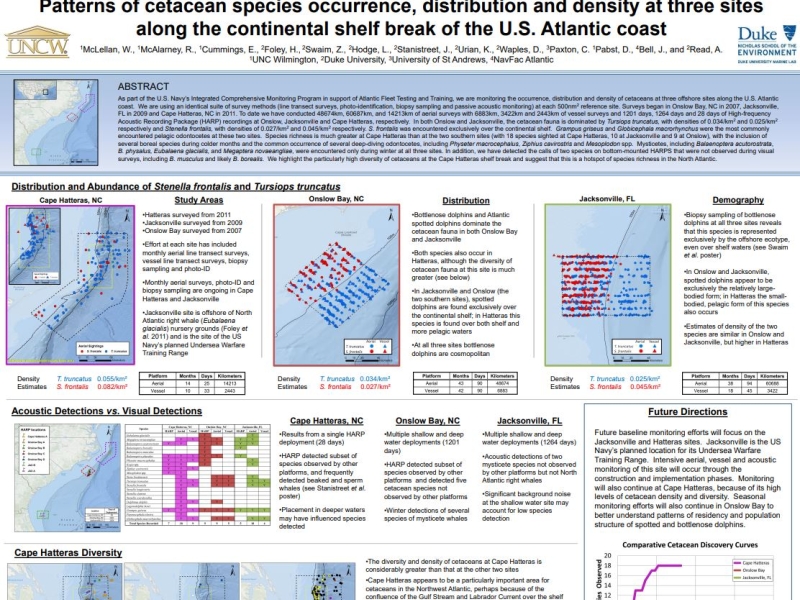
The Integrated Comprehensive Monitoring Program (ICMP) provides an overarching framework for coordination of U.S. Navy marine species monitoring. It is intended for use as a planning tool to focus Navy monitoring priorities pursuant to ESA and MMPA requirements and as an adaptive management tool to analyze and refine monitoring and mitigation techniques over time. It has been developed in direct response to Navy Range permitting requirements established in the various MMPA Final Rules, ESA consultations, and other applicable regulations. In early 2011 the Navy established a Scientific Advisory Group (SAG) consisting of experts in marine mammal ecology, passive acoustic monitoring, and cetacean behavior. The Navy convened the SAG with the initial task of evaluating current monitoring approaches under the ICMP and existing Letters of Authorization and developing objective scientific recommendations that will serve as the basis for a Strategic Plan for Navy monitoring. The Strategic Plan will be integrated as a primary component of the ICMP and provide a comprehensive 3-5 year “vision” for Navy monitoring across geographic regions - serving as guidance for determining how to most efficiently and effectively invest the U.S. Fleet marine species monitoring budget to address ICMP objectives and satisfy Marine Mammal Protection Act Letter of Authorization regulatory requirements for Fleet testing and training activities.
- 169.53 KB
Global distribution of fin whales Balaenoptera physalus in the post-whaling era (1980–2012).
Mammal Review. 2015.
45:197-214
More details
Collapse details
Date Published:
Publication:Species:
- September 16, 2015
The global distribution of fin whales Balaenoptera physalus is not fully understood. Existing maps can be divided into two conflicting categories: one showing a continuous global distribution and another showing an equatorial hiatus (gap in the global distribution) between approximately 20°N and 20°S. Questions also remain about the seasonal distribution of fin whales. To explore the suggested equatorial hiatus and seasonal distribution patterns, we synthesised information on fin whale distribution in the post-whaling era (1980–2012) from published literature, publicly available reports and studies conducted by various organisations. We created four seasonally stratified maps showing line-transect density estimates, line-transect survey effort, acoustic detections, and sightings. An equatorial hiatus in the global distribution of fin whales during the postwhaling era is supported by numerous line-transect surveys and by the rarity of equatorial acoustic detections and sightings, and corroborated by whaling era reports, morphological analyses, and genetic analyses. Our synthesis of post-whaling era data is consistent with results from other studies indicating that fin whales are more abundant at higher latitudes during warmer months and more abundant at lower latitudes (although these latitudes are still greater than 20°) during colder months. However, our synthesis and results from other studies also indicate that some fin whales in both hemispheres remain in higher latitudes (50°–60° north or south) during colder months and in lower latitudes (to approximately 20°–30° north or south) during warmer months, indicating that seasonal fin whale movements differ from the seasonal migrations of blue whales Balaenoptera musculus and humpback whales Megaptera novaeangliae. Our maps of global fin whale distribution provide a comprehensive picture of current knowledge and highlight important geographical and temporal data gaps. Surveys should be conducted within the identified data gaps in order to increase fine-scale spatial and temporal knowledge of distribution patterns, improve fin whale taxonomy, and identify areas of elevated fin whale densities that may require management of threats, such as ship strikes.
Ecological inferences about marine mammals from passive acoustic data.
Biological Reviews. 2023.
98:1633–1647
More details
Collapse details
Date Published:
Publication:Methods:
- May 4, 2023
Monitoring on the basis of sound recordings, or passive acoustic monitoring, can complement or serve as an alternative to real-time visual or aural monitoring of marine mammals and other animals by human observers. Passive acoustic data can support the estimation of common, individual-level ecological metrics, such as presence, detection-weighted occupancy, abundance and density, population viability and structure, and behaviour. Passive acoustic data also can support estimation of some community-level metrics, such as species richness and composition. The feasibility of estimation and certainty of estimates is highly context dependent, and understanding the factors that affect the reliability of measurements is useful for those considering whether to use passive acoustic data. Here, we review basic concepts and methods of passive acoustic sampling in marine systems that often are applicable to marine mammal research and conservation. Our ultimate aim is to facilitate collaboration among ecologists, bioacousticians, and data analysts.
Automated Acoustic Tracking of a Sperm Whale (Physeter macrocephalus) using a Wide Baseline Array of Sensors.
FUSION. 2024.
1–7
More details
Collapse details
Date Published:
Publication:Species:Methods:
- July 11, 2024
Underwater acoustics is a key tool for monitoring marine environments and understanding marine mammal populations. However, extracting meaningful information from passive acoustic recordings poses challenges due to overlapping signals, species-specific vocalization behavior, and missed and false detections. Many methods for marine mammal tracking and localization rely on human operators for signal detection and measurement association, which is a subjective and laborious process. In this paper we demonstrate a fully automated framework for marine mammal tracking and localization using wide-baseline arrays based on a multi-target Bayesian approach. Leveraging a “track-before-localize” strategy and fusing information from multiple sensors and virtual sensors, the framework eliminates the need for detection, classification, or association steps, thereby improving efficiency and objectivity. The feasibility and performance of the proposed framework are demonstrated using real-world data of a clicking sperm whale from the US Navy’s AUTEC test range.
SMART SEED Annual Review. Tysons, Virginia .
Oral Presentation, Effects of Sound on Marine Mammals, Beaufort, North Carolina, 15-18 March 2022 .
More details
Collapse details
Date Published:
- March 15, 2022
Marine mammals and sonar: Dose-response studies, the risk-disturbance hypothesis and the role of exposure context.
Journal of Applied Ecology. 2017.
55:396-404
More details
Collapse details
Date Published:
Publication:Methods:
- June 19, 2017
Behavioural response studies have greatly improved our understanding of the potential effects of naval sonar on marine mammals. Despite data gaps, we believe a dose-response approach within a risk-disturbance framework will enhance our ability to predict responsiveness for unstudied species and populations. We advocate for (1) regulatory frameworks to utilize peer-reviewed research findings when making predictions of impact, (2) regulatory frameworks to account for the inherent uncertainty in predictions of impact and (3) investment in monitoring programmes that are both directed by recent research and offer opportunities for validation of predictions at the individual and population level.
The Effects of Noise on Aquatic Life, Berlin, Germany, 10-15 July 2022 .
Echolocation behavior of endangered fish-eating killer whales (Orcinus orca) recorded from digital acoustic recording tags (DTAGs): Insight into subsurface foraging activity.
Journal of the Acoustical Society of America. 2016.
140(4, Part 2):3130
More details
Collapse details
Date Published:
Publication:Species:Methods:
- October 1, 2016
Killer whales are apex predators with diet specializations that vary among ecotypes. Resident killer whales use broadband echolocation clicks to detect and capture fish prey in their underwater environment. Here, we describe the echolocation behavior of endangered Southern Resident killer whales using DTAGs to determine subsurface foraging activity and to assess the effects of vessel and noise on foraging behavior. We deployed 29 DTAGs on individually-identified killer whales and collected complimentary field data over four seasons in summer habitat. DTAGs had two hydrophones that each recorded sound at sampling rates of 192 or 240 kHz, and other sensors to reconstruct whale movement. Prey remains were opportunistically collected during tag deployments to validate feeding. Echolocation signals of the tagged whale were inferred from spectral content and the angle of arrival that corresponded to tag placement. Preliminary results reveal that individuals produced steady click trains during shallow dives then dove to deeper depths while clicking at higher repetition rates that graded into bottom-associated low-level buzzes before ascent occurred. These results, together with movement data, are reliable subsurface foraging cues in this endangered population that can be used to assess vessel effects on foraging behavior.
Continuous-time modelling of behavioural responses in animal movement.
Annals of Applied Statistics. 2023.
17(4):3570–3588
More details
Collapse details
Date Published:
Publication:Methods:
- December 1, 2023
We propose varying-coefficient stochastic differential equations (SDEs) as a flexible framework to model such data with two components: (1) time-varying baseline dynamics, modelled with nonparametric or random effects of time-varying covariates, and (2) a nonparametric response model, which captures deviations from baseline. SDEs are specified in continuous time, which makes it straightforward to analyse data collected at irregular time intervals, a common situation for animal tracking studies. We describe how the model can be embedded into a state-space modelling framework to account for measurement error. We present inferential methods for model fitting, model checking, and uncertainty quantification (including on the response model). We apply this approach to two behavioural response study data sets on beaked whales: a satellite track and high-resolution depth data. Our results suggest that the whales’ horizontal movement and vertical diving behaviour changed after exposure to the sound source, and future work should evaluate the severity and possible consequences of these responses.
Marine seismic surveys and ocean noise: Mitigation, monitoring and a plan for international management.
21st Biennial Conference on the Biology of Marine Mammals .
More details
Collapse details
Date Published:
Filesize:
- December 13, 2015
Given the extent of seismic surveys and their potential negative environmental impacts, there is need for systematic planning and operational standards to minimize or eliminate impacts, especially in sensitive areas. Mitigating immediate potential impacts is important, but monitoring for short- as well as long-term impacts is essential. Risks from cumulative, synergistic, and synchronous effects, which may occur over large spatial and temporal scales, are rarely considered sufficiently in environmental assessments; regulatory requirements vary widely from one country/jurisdiction to another. We describe a series of basic elements for responsibly conducting marine seismic surveys or other major noise generating activity: obtaining consistent baseline ecological data; substantial advance planning, communication, transparency and critical review; integrated acoustic and visual monitoring during operations; and systematic analysis and sharing of results to inform future planning and mitigation. These programs need to be adaptive and not all elements are needed in every case. In addition to these elements, given the international and transboundary nature of ocean noise generally, we assert the urgent need for a consistent worldwide approach to address this issue. Such a framework could involve the creation of a new international instrument or, preferably, the extension of an existing one (e.g. International Convention on the Prevention of Pollution from Ships - MARPOL). The broad issue of ocean noise is being discussed and precedents for such international instruments exist within a range of intergovernmental organizations (e.g., CBD, IMO, CMS and IWC). In addition, the US requires consideration of noise in the preparation of environmental impact statements and the EU has recognized ocean noise as a pollutant and an indicator of environmental quality under its Marine Strategy Framework Directive. The time is ripe and the need is great to consolidate such initiatives to develop a consistent, effective, science-based international regulatory framework to address the issue of ocean noise.
- 92.81 KB
Does depth matter? Investigating the effect of recording depth on delphinid whistle characteristics and classifier performance.
Journal of the Acoustical Society of America. 2016.
139(4,Part 2):2060-2061
More details
Collapse details
Date Published:
Publication:Methods:
- April 1, 2016
Seafloor acoustic recorders are commonly used to obtain information about cetaceans, as they allow data to be collected for long periods without the presence of a human operator. Recordings collected using seafloor instruments do not have associated visual observations, so species must be identified based on their calls. Visually validated acoustic recordings are necessary for training acoustic species classifiers and so most are trained using data collected near the sea surface. The suitability of using classifiers trained using surface recordings to analyze recordings obtained at depth is unknown. To investigate this, we used a vertical array of four Ecological Acoustic Recorders (EARs) spaced 90 m apart to record delphinids at different depths. The same whistles were measured from each EAR and median values of 17 spectrographic variables were compared among EARs for six acoustic encounters. For five of the encounters, there were significant differences in whistle variables among EARs, most commonly in frequency variables. When a random forest classifier was used to identify these whistles to species, the same five encounters were classified as different species when recorded at different depths. These results suggest that caution should be taken when applying classifiers developed using surface data to whistles recorded at depth.
Automatic detection and characterization of mid-frequency active sonar and its impact on marine mammal vocalizations.
6th International Workshop on Detection, Classification, Localization and Density Estimation of Marine Mammals using Passive Acoustics .
More details
Collapse details
Date Published:
Filesize:
- June 12, 2013
Mid-Frequency Active (MFA) sonar includes a variety of constant-frequency and frequencymodulated signal types, ranging between 1 kHz and 10 kHz. Studies have shown correlations between MFA sonar and marine mammal strandings, behavioral reactions, and potential temporary threshold shifts. Presently, there are no standardized methods available for detection and quantification of sonar signals, or assessment of their impacts on marine mammal acoustic behavior. ‘SonarFinder’ is a semi-automated Matlab-based program we have developed to fill that need. SonarFinder is intended for use on large acoustic datasets such as those collected from autonomous recorders and other passive acoustic systems. It can batch process all wav-format files in a folder unsupervised, and save results to multiple spreadsheets. SonarFinder uses a 3-step testing scheme to separate true sonar from noise and transients. Step 1 uses an amplitude threshold, step 2 an ‘amplitude integrated over time’ threshold, and step 3 the power spectral density of a predefined band. Only detections which pass all three steps are logged as sonar. Measurements in the frequency and time domains are used to characterize and classify sonar pings. Output from the detector can be automatically compared to a user-supplied list of marine mammal detections. A dose response parameter and the probabilities of animal vocalizations occurring in the presence and absence of sonar are calculated based on this comparison to allow assessment of the relationship between sonar presence and marine mammal acoustic behavior. We tested SonarFinder using several autonomous recorder datasets. Precision and recall for these tests ranged from .56 to .71 and .33 to .89, respectively. Based on these results, SonarFinder is a valuable tool for quantifying the presence of sonar with respect to marine mammal vocalizations. The output of SonarFinder will allow a deeper understanding of how marine mammals may be responding to this anthropogenic sound.
- 189.34 KB
Society for Mexican Marine Mammalogy, May 2023, Manzanillo, Mexico .
More details
Collapse details
Date Published:
- May 1, 2023
More details
Collapse details
Date Published:
Filesize:
- August 1, 2014
Naval activities such as ordnance disposal, demolition and requisite training, can involve detonation of small explosive charges in shallow water that have the potential to harm nearby marine life. Measurements of the underwater sound generated by sub-surface explosions were collected as part of a naval training exercise. In this thesis the noise levels from these explosions will be investigated using peak pressure, sound exposure level and energy spectral density. Measurements of very-low frequeny Scholte interface waves will also be presented and used to investigate elastic parameters in the sediment.
- 10,663.43 KB
Streamlining High-Volume Data Acquisition, Analysis and Tracking of Marine Mammals with Highly Configurable, Standards-based Software.
27th Conference of the European Cetacean Society .
More details
Collapse details
Date Published:
Filesize:
- April 8, 2013
To meet the need for all-in-one, user-configurable, user-friendly combined survey/behavioral data collection and analysis software, the Mysticetus Observation Platform (Mysticetus) has been designed, tested and field deployed in numerous aerial, vessel and shore-based surveys for marine mammals around the world. Mysticetus provides real-time distance and bearing to a sighting by synthesizing real-time Global Positioning System (GPS) data with the declination angles (converted to distance) and times of sightings. This feature has been critical to quickly relocating sightings, particularly in higher Beaufort conditions. Relative location of the sighting to the aircraft/vessel is continuously displayed on a map on a laptop, and automatically adapts to changing distances and headings of the platform. Real-time bathymetric data are displayed, and can be used to determine numerous sea-floor characteristics in the survey area (e.g., depth, slope, aspect). Mysticetus also triangulates, in real-time, directional acoustic data received via radio from sonobuoys, allowing correlation of behavior with vocalizations, both in the field and during post-processing. Other post-survey analysis tools include automated tabular summaries of effort and sightings, Google Earth 3-D track display, distance-to-shore calculations, etc., that greatly reduce data, GIS and analysis efforts. Mysticetus is unique from other available similar software because it is easily configured by the user to select data fields/types, units, etc., and can record, summarize, analyze and plot data as indicated by the user.
- 639.51 KB
Complete
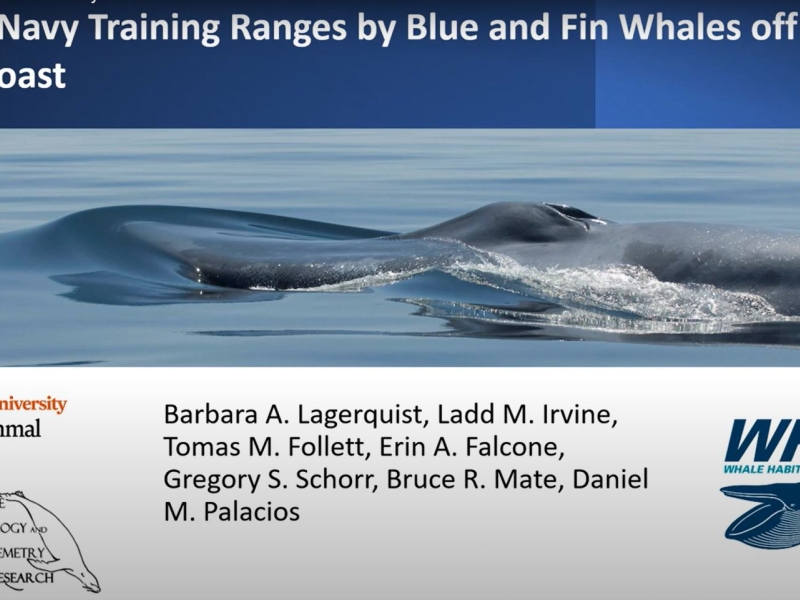
Blue and Fin Whale Satellite Tagging
Project Objectives
Determine the movement patterns, occurrence, and residence times of blue whales and fin whales within U.S. Navy training and testing areas as well as Biologically Important Areas along the U.S. West Coast
Current
Gulf of Alaska Acoustic Moorings and Analysis
Project Objectives
Conduct systematic line transect survey for marine mammals for density estimates; conduct survey to determine ecotype identity of killer whales; analyze existing and newly collected data for seasonal occurrence, abundance, and density of cetacean
Current
Long Term Acoustic Monitoring of Marine Mammals Utilizing the Instrumented Range at Pacific Missile Range Facility (PMRF)
Project Objectives
Improve understanding of the long term trends in occurrence of marine mammals (e.g., minke, humpback, fin, Bryde's, Blainville's) on the PMRF range. Examine what, if any, acoustic and physical behavioral responses occur to Navy activities.
Current
Marine Mammal Sightings During CalCOFI Cruises
Project Objectives
Determine what species and populations of marine mammals are present in Southern California and estimate the abundance and density across seasons
Current
Mid-Atlantic Nearshore & Mid-shelf Baleen Whale Monitoring
Project Objectives
Assess occurrence, habitat use, and baseline behavior of baleen whales in the mid-Atlantic region
Complete
Passive Acoustic Monitoring of Marine Mammals in the Gulf of Alaska
Project Objectives
Determine the spatial distribution and occurrence of beaked whales, other odontocetes, and baleen whales in offshore areas using bottom-mounted passive acoustic recorders and deep-diving autonomous gliders
Complete
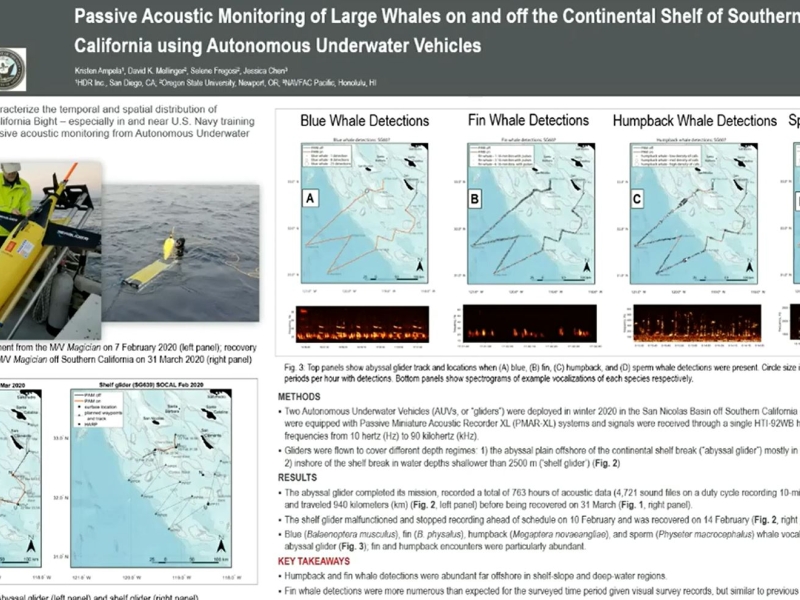
Passive Acoustic Monitoring of Marine Mammals Using Autonomous Underwater Vehicles in Southern California
Project Objectives
Explore presence of marine mammals in less-surveyed, offshore areas
Current
Southern California Beaked Whale Occurrence (formerly "Passive Acoustic Monitoring of Marine Mammals in Southern California Range Complex (SOCAL)")
Project Objectives
Determine the distribution and temporal patterns of beaked whale occurrence in the waters within and outside the Southern California Range Complex (SOCAL). Use passive acoustic monitoring to determine what species are present in SOCAL and examine spatial and temporal patterns.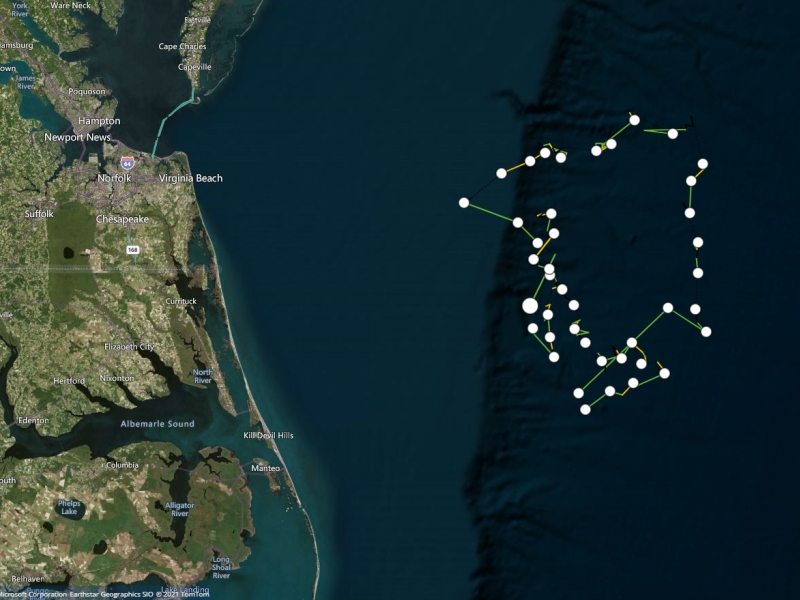
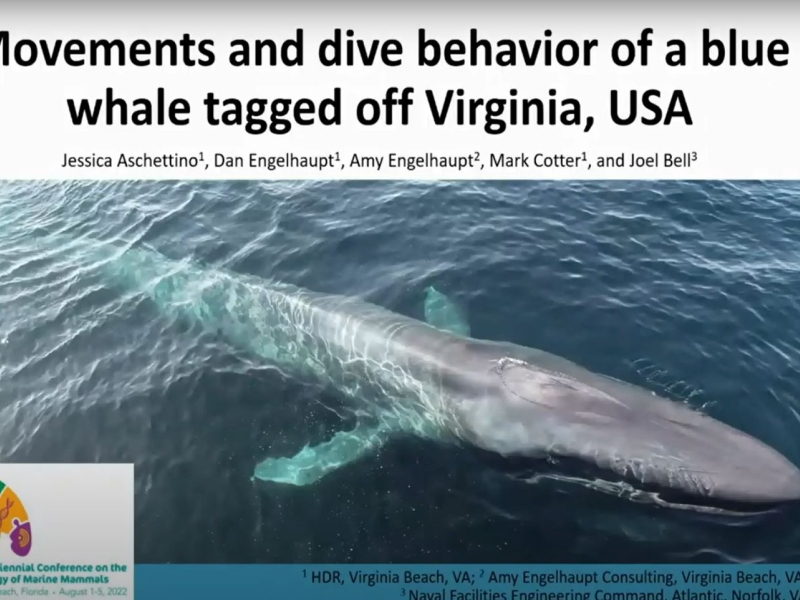
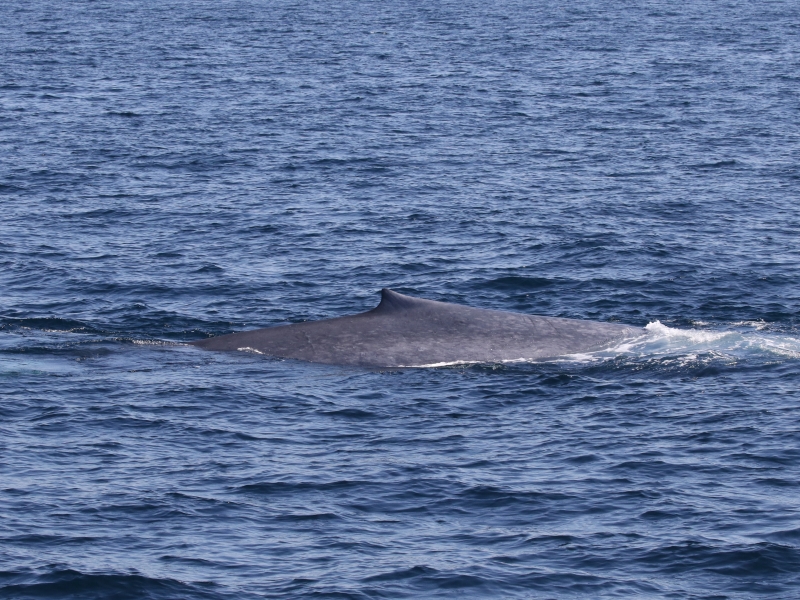
Blue whale tagged off the coast of Virginia
April 26, 2021
Details on the first blue whale tagged in the region.
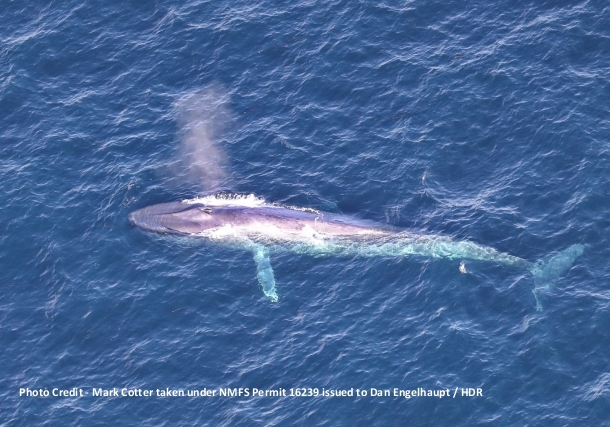
Drone footage of a blue whale off the coast of Virginia!
March 14, 2021
Blue whale footage from Virginia
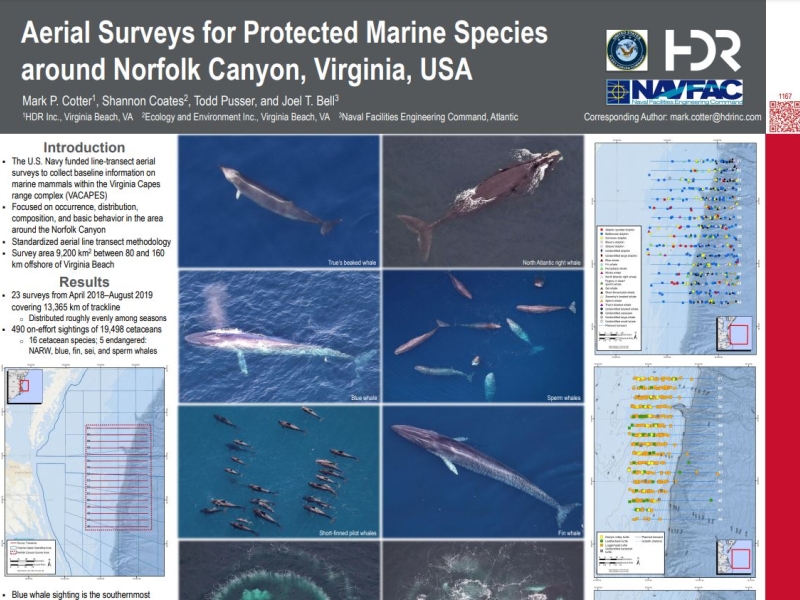
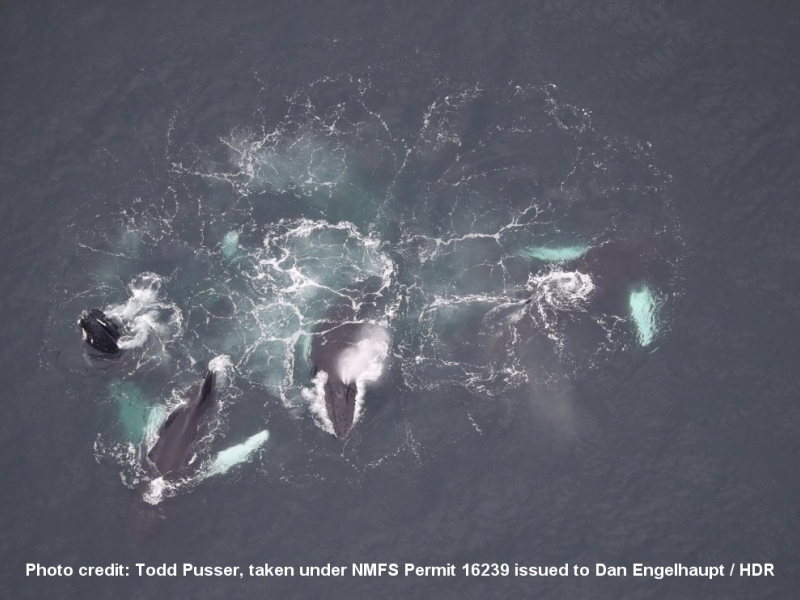
Fin and blue whale feeding aggregation observed in Norfolk Canyon study area
March 26, 2019
Baleen whale feeding assemblage offshore of Virginia.
Blue whales and sei whales and right whales - OH MY!!!
April 18, 2018
A spring aggregation of endangered whales offshore.